
A story from the school
The Himalayas: The Road to Ganesha's Lake
Dodital Lake, Darwa Pass, nights in the mountains and a journey in which yoga revealed itself beyond the usual practice.
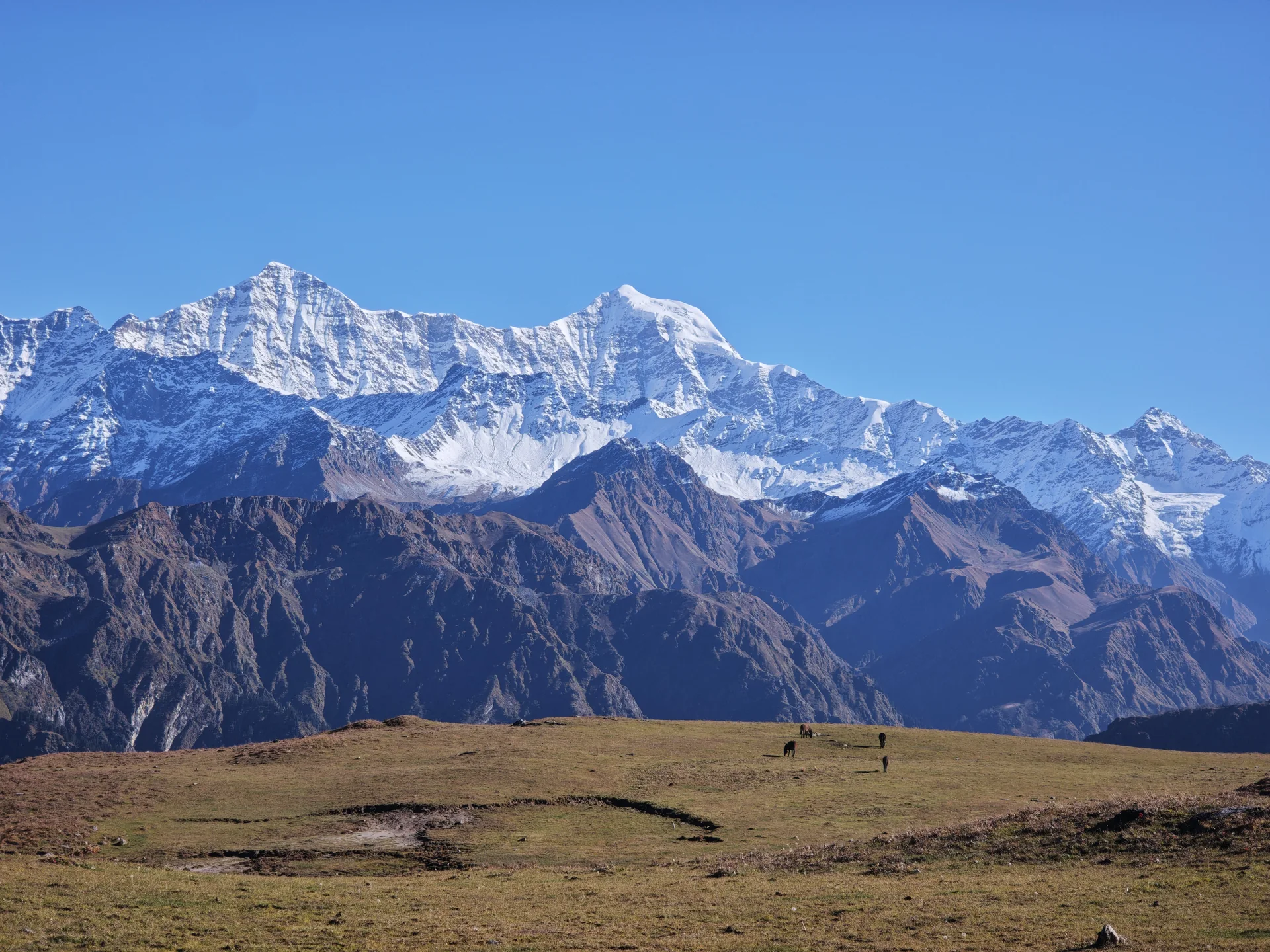
The Garhwal Himalayas have inspired and surprised me for many years. I try to return to these mountains every year, and over time we have explored many remarkable places in the Indian state of Uttarakhand.
We have visited the great Himalayan pilgrimage sites of Kedarnath, Badrinath and Gangotri, climbed to Hemkund Sahib—the world's highest gurdwara—and walked through the famous Valley of Flowers.
Yet the place we return to most often is Gangotri National Park and the sacred high-altitude valley of Tapovan, about 4,200 metres above sea level, above the Gomukh Glacier. At its snout, the Bhagirathi River begins its journey: it is one of the principal headwaters of the sacred Ganges.
There, at the foot of the majestic Mount Shivling, lives the holy hermit Muni Baba. Over the years, Tapovan has become a true place of power for me, one that draws me back again and again. We have even tried three times to climb Little Shivling, to about 5,500 metres, but so far the mountain has not let us reach it. Perhaps the time has not yet come.
Still, we keep discovering new corners of the Garhwal Himalayas. This time our route began in the small mountain village of Agoda. From there, we planned to climb to the high-altitude lake of Dodital, cross Darwa Pass and descend on the other side of the ridge into the Yamuna Valley.
Dodital is a special place. According to local tradition, Ganesha was born here. We hoped to hold a ritual dedicated to him on the lakeshore. We did not want religious orthodoxy or a rigid ceremony, but something of our own: a living, creative encounter with the elements and the spirit of the place.
Our group was small this time. Several people who had planned to come could not join us at the last moment for various personal reasons. We decided to go ahead.
One particularly special member of our group was Masha Makarova, known for the band Masha i Medvedi (Masha and the Bears). She brought a guitar into the mountains to sing her songs and hymns she had prepared especially for Ganapati on the shore of Ganesha's lake.
The mountains set their own terms
Things began going off plan almost immediately.
Organisational delays meant we left later than expected, and it was already night when we approached Agoda. But we could not reach the village: a landslide had blocked the road.
Another vehicle set out from Agoda to meet us. All we had to do, it seemed, was cross the debris. But that was impossible. Rocks and entire tree trunks were still falling down the slope before our eyes. Trying to cross on foot would have been too dangerous.
We had to find a place to stay in the nearest village.
A local man generously welcomed us into his home. He gave us the rooms where he normally slept and settled himself on the floor by the entrance.
I am always struck by the natural generosity of people who live in the mountains. They often have few material possessions, yet are extraordinarily willing to share what they have.
In the morning, we thanked our host and continued. We had to bypass the landslide on mountain paths, which took another two hours or so.
By then it was clear that our original schedule was gone. Instead of reaching Dodital in a single day, we decided to stop at Manjhi, a traditional campsite for shepherds.
Mountain paths and our first night in camp
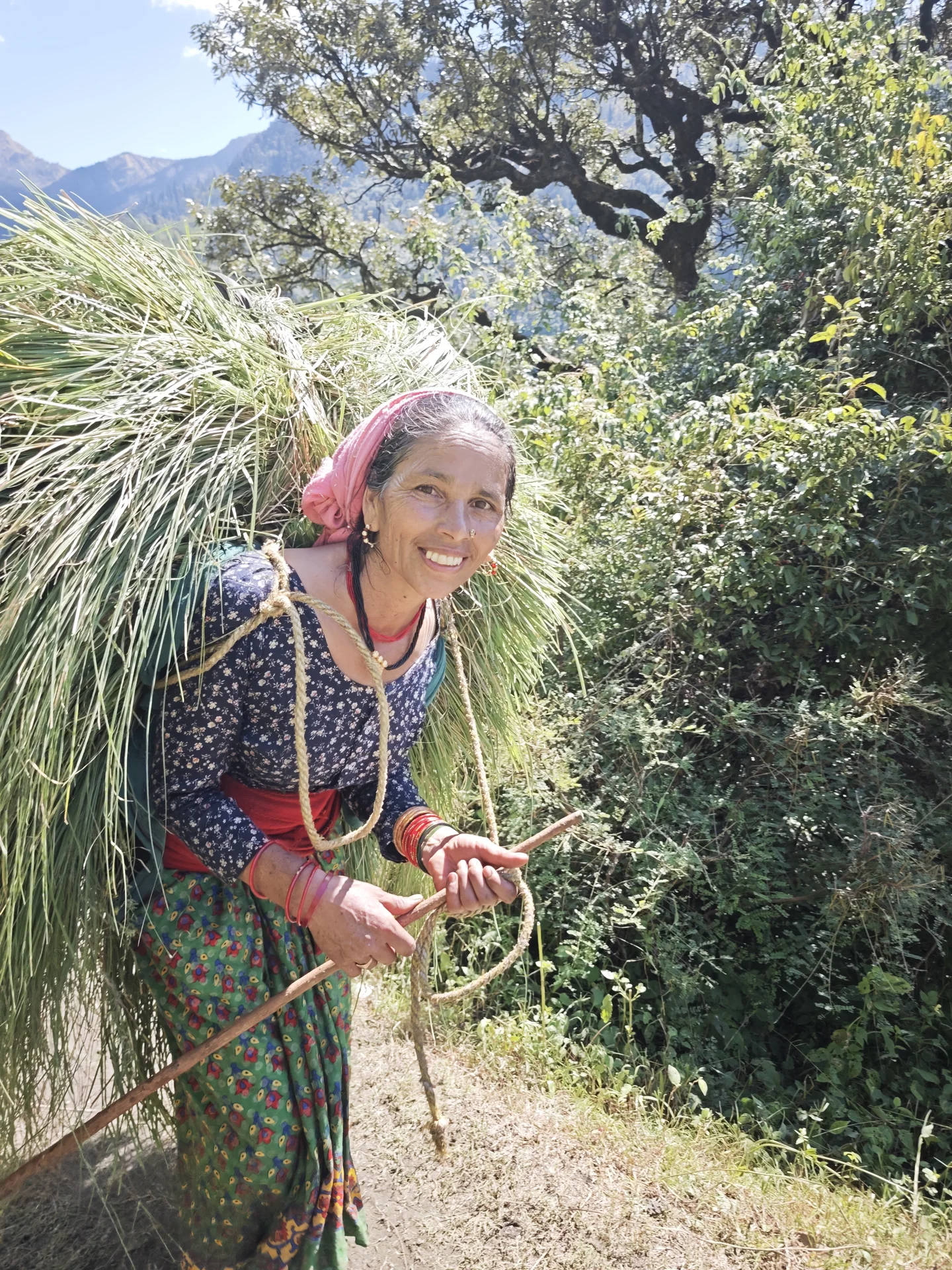
The trail from Agoda to Manjhi is beautiful: great trees, lush greenery, deep gorges and small farming settlements with simple huts. In places, entire hillsides glowed fuchsia with amaranth fields.
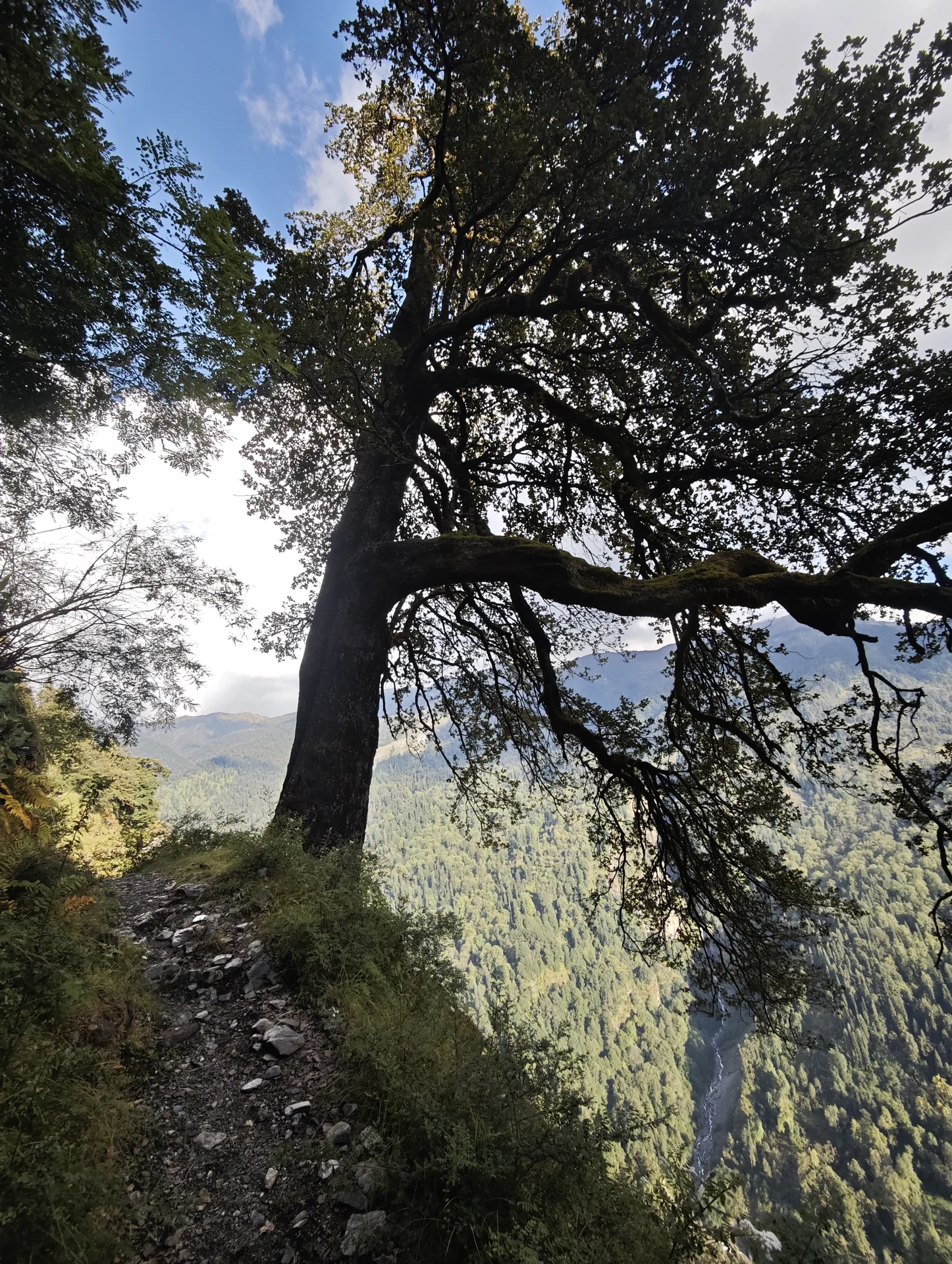
We were lucky with the weather. In fact, good weather stayed with us for almost the entire journey. There was no serious rain. Even the clouds that sometimes hid the peaks felt like a blessing: climbing exposed mountain slopes under a blazing sun is much harder.
On this journey, ponies carried our luggage, so we could walk with light packs.
At one point the trail passed a mountain stream that had formed a lovely natural pool among the rocks.
The water was an extraordinary blue-green—clear and cold. The pool was deep enough to submerge ourselves completely.
None of us could resist. We all plunged into the icy water, and it seemed to fill us with life.
By evening we reached Manjhi and pitched our tents for the first time on this trip. Little by little, we settled into camp life.
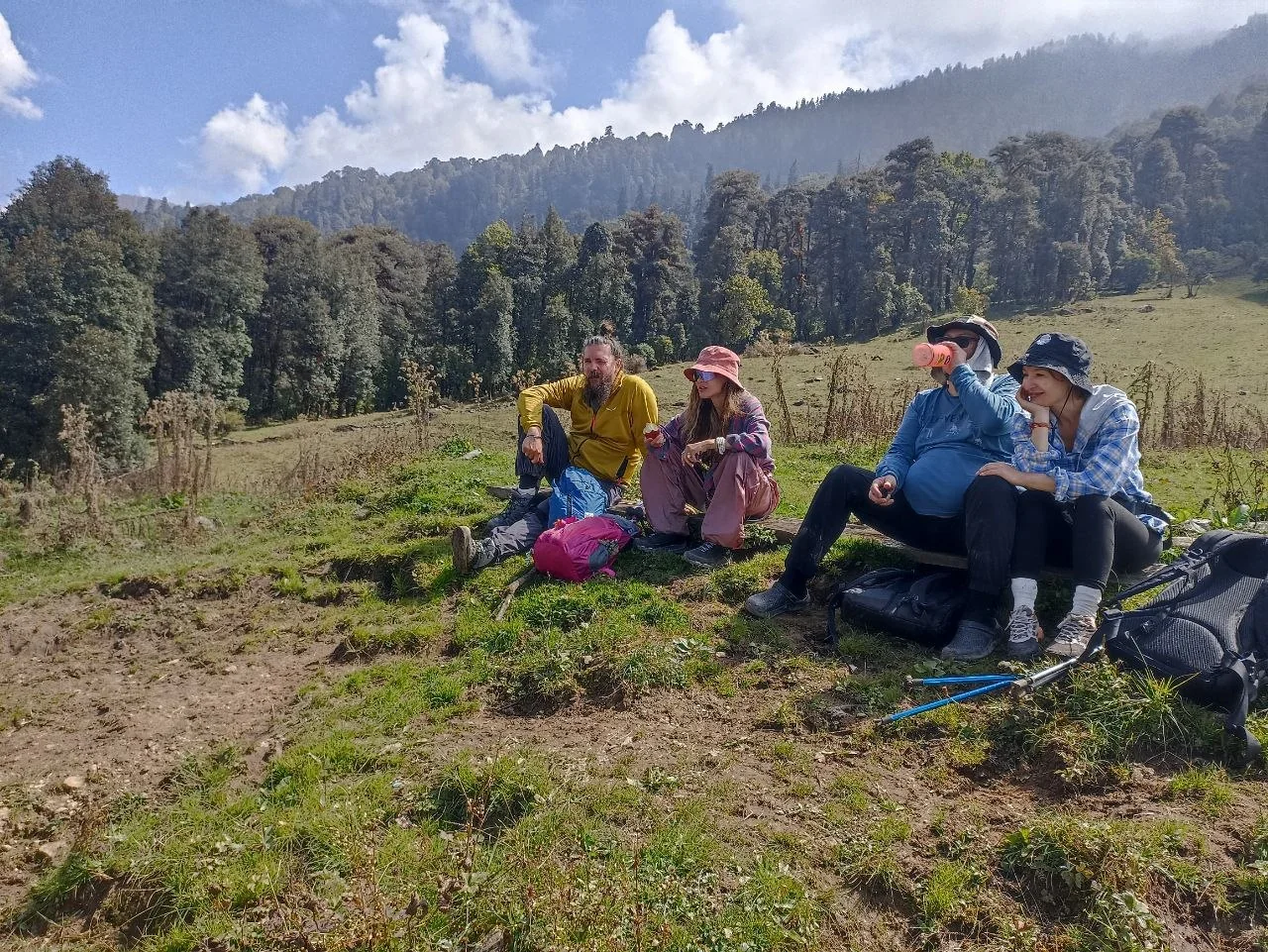
We cooked for ourselves on gas burners in a large communal tent. The menu was surprisingly varied: miso soup, spaghetti, Indian dishes with paneer, flatbreads and papad. We even improvised a cheese soup and a saffron rice pudding.
Masha also made wonderful pancakes, using the lemon-and-ginger tea left over from the previous evening as a starter.
Dodital: the lake where Ganesha was born
The next morning we set out for the lake.
It is not very far from Manjhi to Dodital, and the walk was easy and joyful.
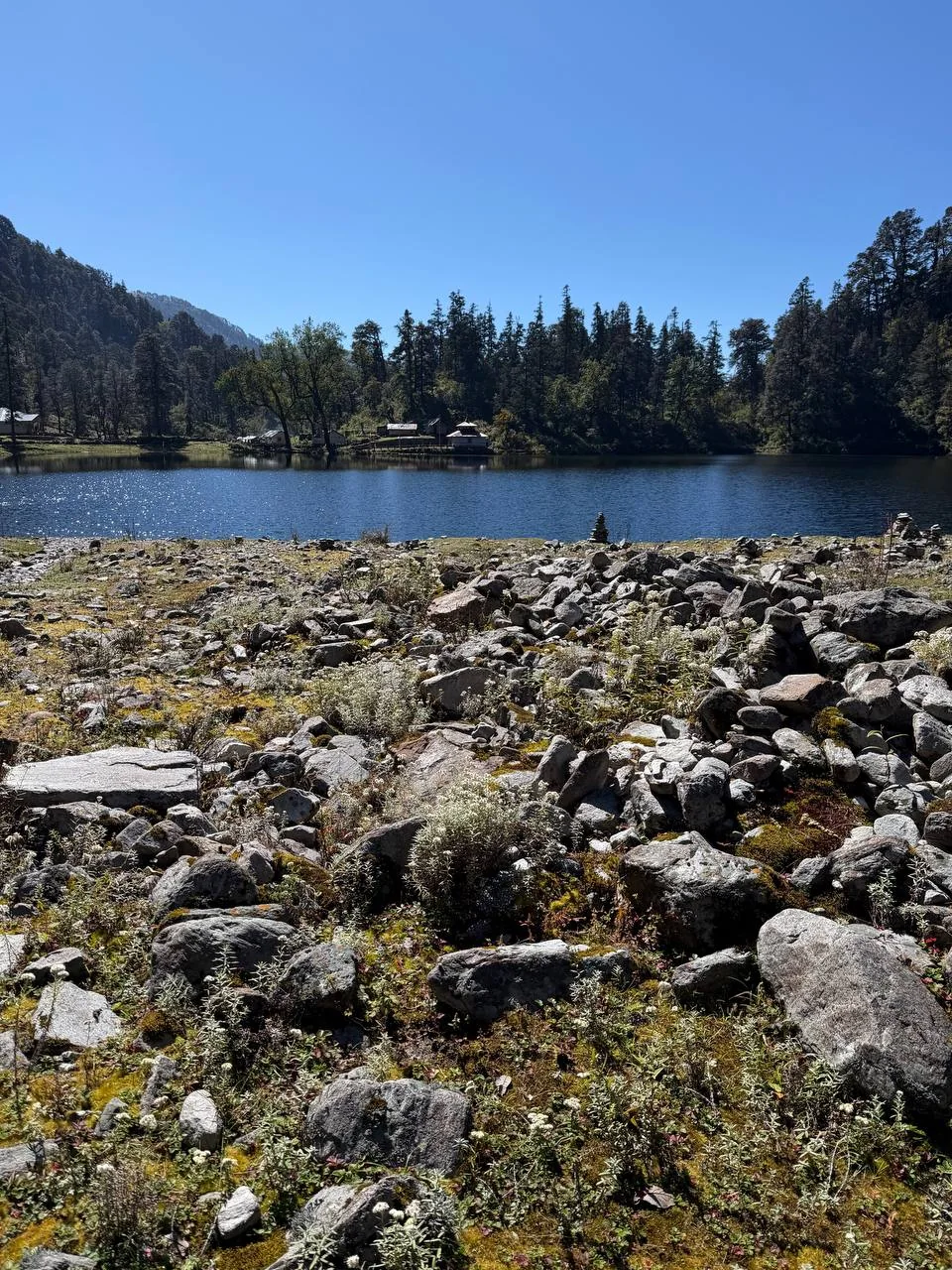
But because of the time we had lost at the beginning of the journey, we now had only one night at the lake instead of the two we had planned.
To be honest, I began to doubt whether we would manage to hold the ceremony at all. I wanted time to prepare, to sense the place and to gather offerings. There was hardly any time left.
Yet everything unfolded much more naturally than I had imagined.
As soon as we arrived, we held a meditation dedicated to Ganapati, one of Ganesha's names.
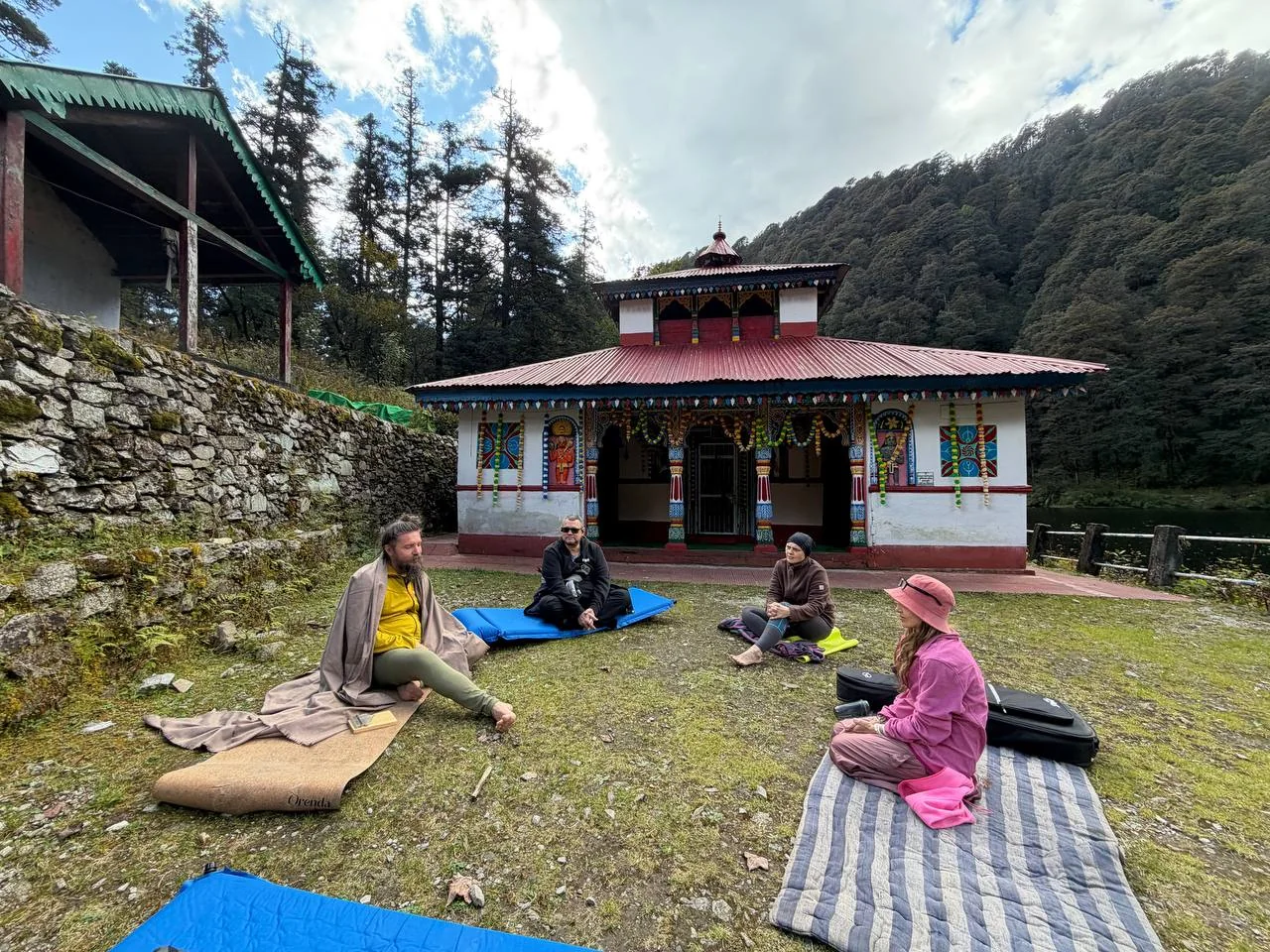
Masha sang the hymns she had prepared. Her voice and the sound of the guitar blended with the stillness of the lake and the surrounding mountains.
Then we wandered off along the shores of Dodital. Each of us explored on our own, gathering flowers, twigs and other natural objects for offerings. It was a kind of small shamanic journey: an attempt to feel the place itself and enter into a dialogue with it.
Gradually, a ceremony began to emerge from these simple acts.
There was no strain, no need to follow a prescribed set of rules. It all happened naturally.
I will not describe the ritual itself in detail. Some things, I believe, should stay within the circle of those who took part.
I will only say that, when it was over, a small miracle occurred.
At least, that is what it was for us.
For now, I will leave that story untold.
Darwa Pass: towards the Monkey's Tail
The next day brought the most demanding part of our route: the climb to Darwa Pass, about 4,000 metres above sea level.
Above the pass rises the Bandarpunch massif, reaching roughly 6,200 metres. Its name means “Monkey's Tail.”
It is a beautiful range, with a distinctive outline of snow-covered peaks.
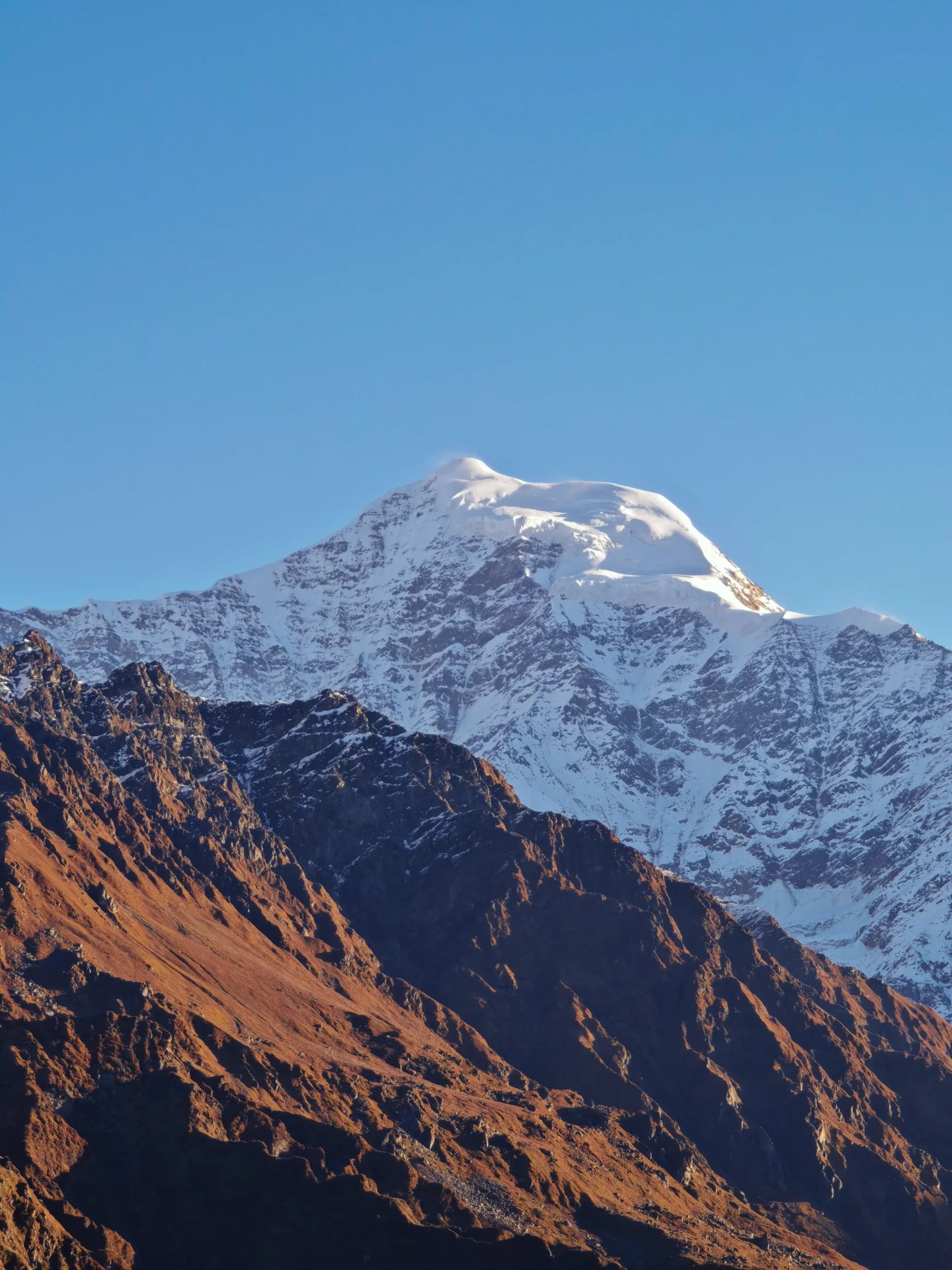
The climb was steep. It was probably the only section of the whole journey I would call truly physically difficult.
By then, one of our companions had badly blistered his feet—in expensive, high-quality trekking shoes, no less. He could no longer continue the climb on foot, so we put him on a pony.
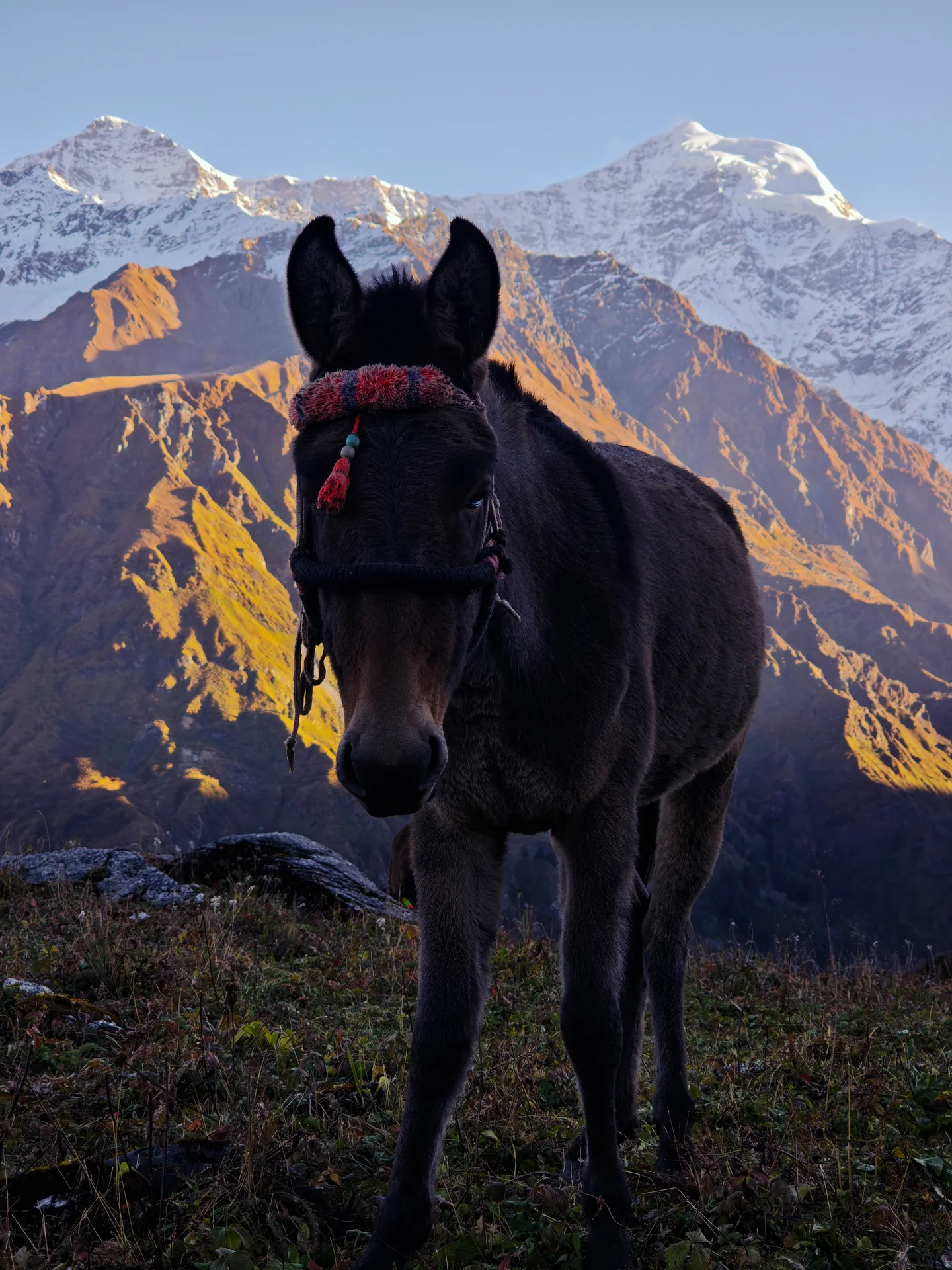
At the pass itself, we found the time and strength for a short practice.
We did a cosmic kriya.
It was one of the few full yoga sessions of the journey, but it is the one I remember most vividly.
The altitude, open space, physical fatigue and atmosphere of the mountains came together in a special way. The practice went deep, and we entered a subtle, powerful cosmic state.
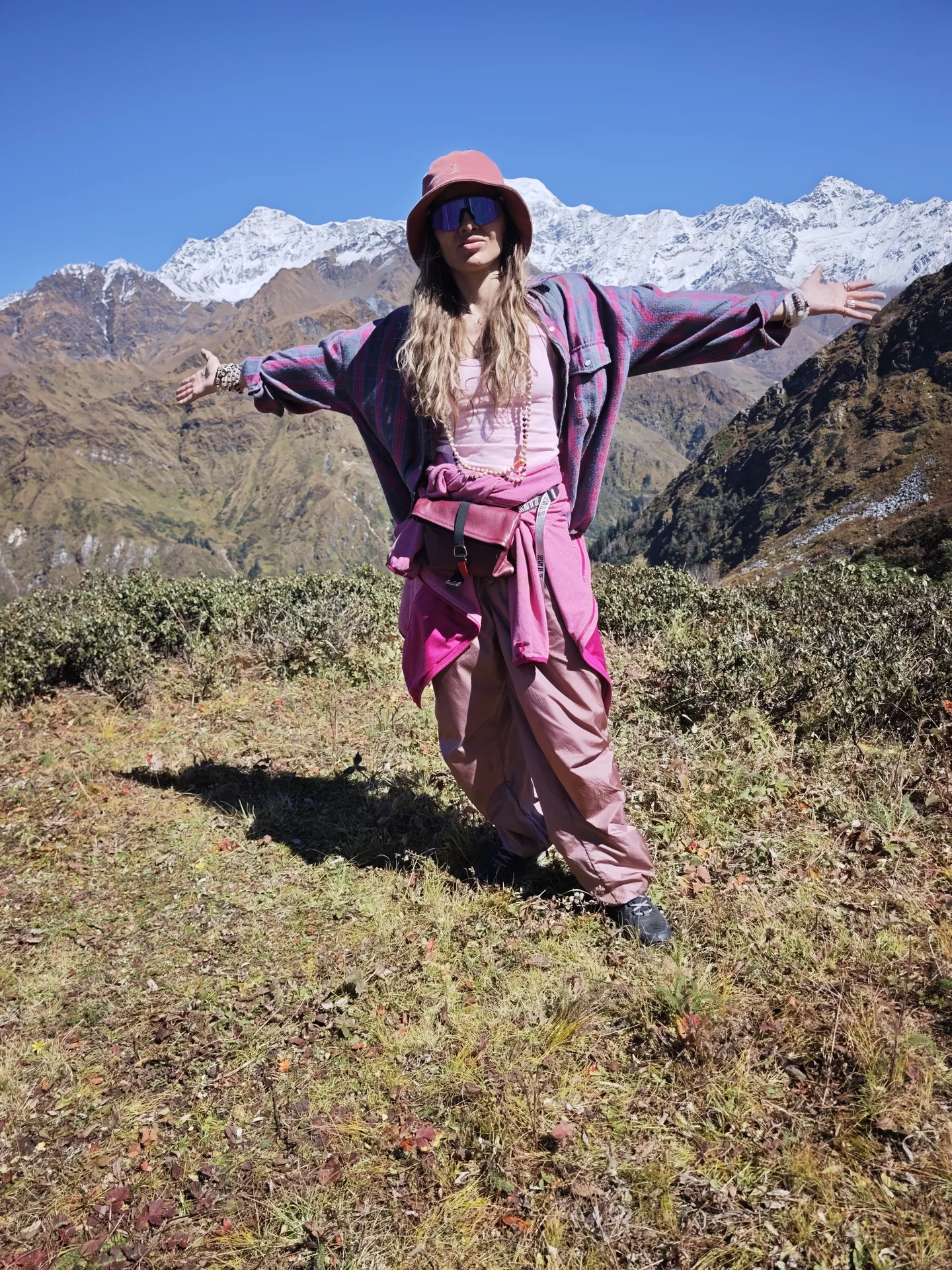
Then we began to descend towards the high mountain meadows, where we decided to camp for the night.
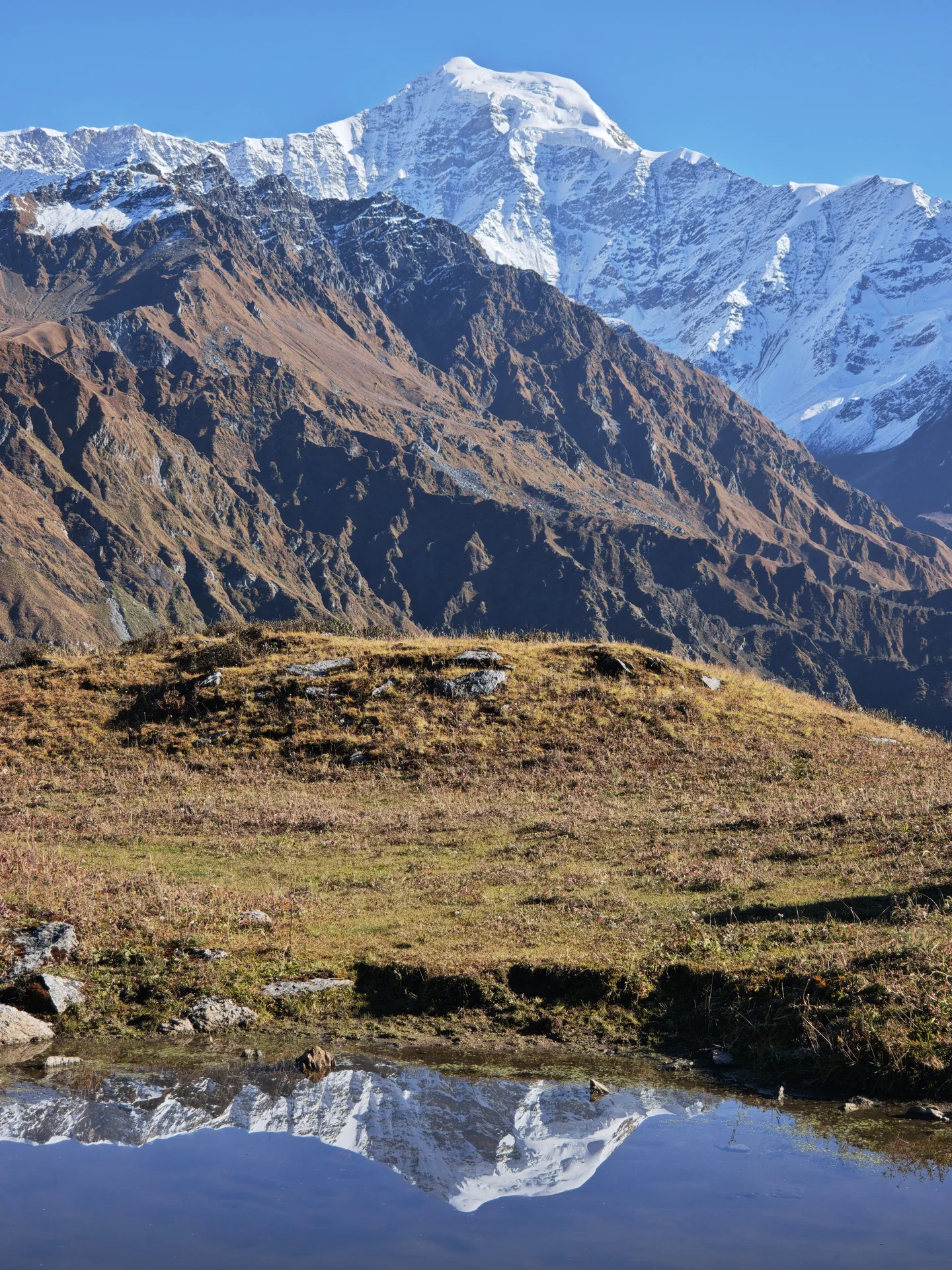
We barely saw the sunset that evening—the peaks were hidden by clouds. But at night an endless starry sky opened above us, and in the morning the mountains gave us a beautiful sunrise.
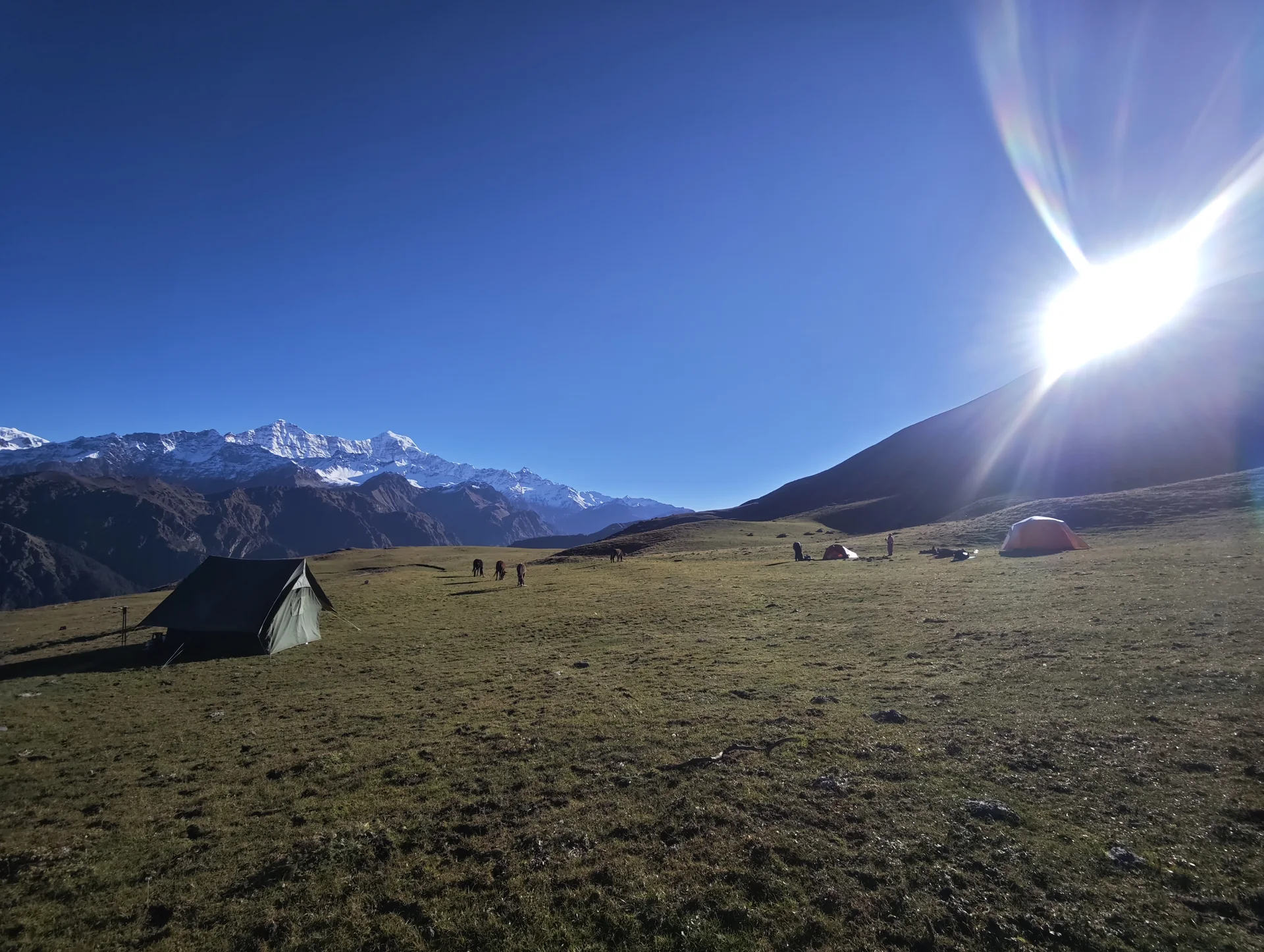
High meadows, the snowy peaks of Bandarpunch, silence and clear air.
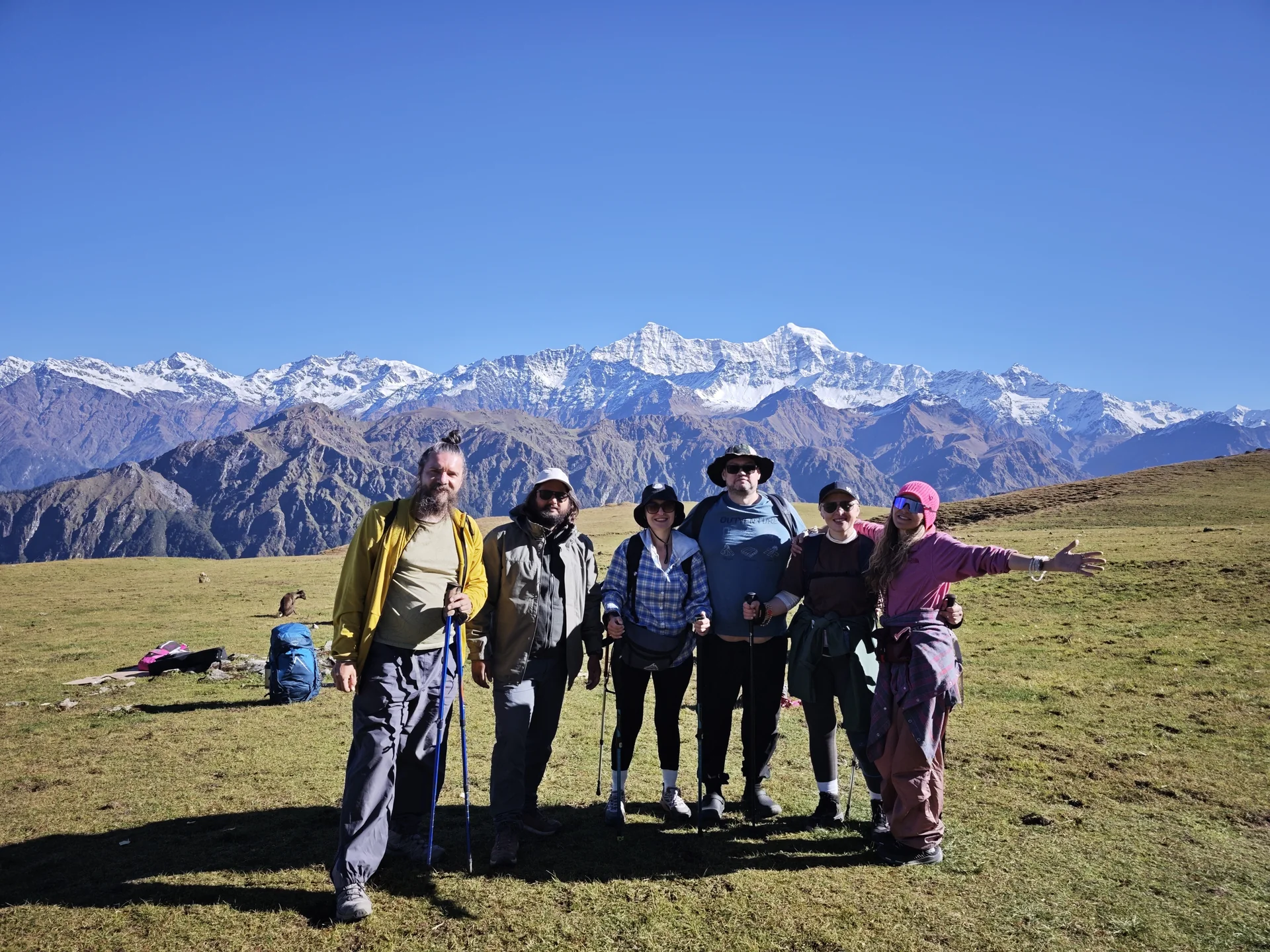
A little miracle in Crocs
The following day was going to be long. We had a considerable distance to cover on mountain trails.
But there was a problem.
Our companion, who had ridden over the pass the day before, could now barely walk. His feet were badly blistered, and on this section there was no way to use a pony.
The situation was becoming serious.
Masha and I went ahead. Our guide stayed with the rest of the group.
We checked in with him from time to time by radio, and the news was discouraging. Our friend had almost stopped moving.
We were very worried about him.
At one point, Masha began singing a particular pauri from Japji Sahib, asking for help in overcoming this obstacle.
And we kept walking.
Several hours later, we reached a place we thought was our destination for the day. It turned out that the planned campsite was still about another hour's walk away.
I insisted that we stop where we were. We needed to shorten the distance as much as possible for our friend, for whom every step was a struggle.
We began putting up the tents and decided to prepare dinner early.
Suddenly, we saw a lone figure in the distance, moving quickly towards our camp.
At first, we thought it was a local hiker.
But as the person came closer, the outline began to look familiar.
It was our friend!
We could hardly believe our eyes.
In about half an hour he had covered a distance that seemed to have taken us several hours.
His arrival looked almost fantastical.
Do you remember the famous scene from the Soviet film The Diamond Arm in which Andrei Mironov's character seems to walk on water, a glowing halo above his head?
That is more or less how he appeared to us.
We stared in astonishment, then burst out laughing and shouting, “Hallelujah!”
The explanation was simple.
He had taken off his expensive trekking shoes and put on an ordinary pair of Crocs.
And he walked.
Sometimes that is how a problem that seemed almost impossible just minutes before is solved.
The road to the Yamuna
Our final day was devoted to the descent into the Yamuna Valley.
The high meadows gradually gave way to forests. Great trees appeared, along with dense vegetation and many herbs and medicinal plants, some of which are used in Ayurveda.
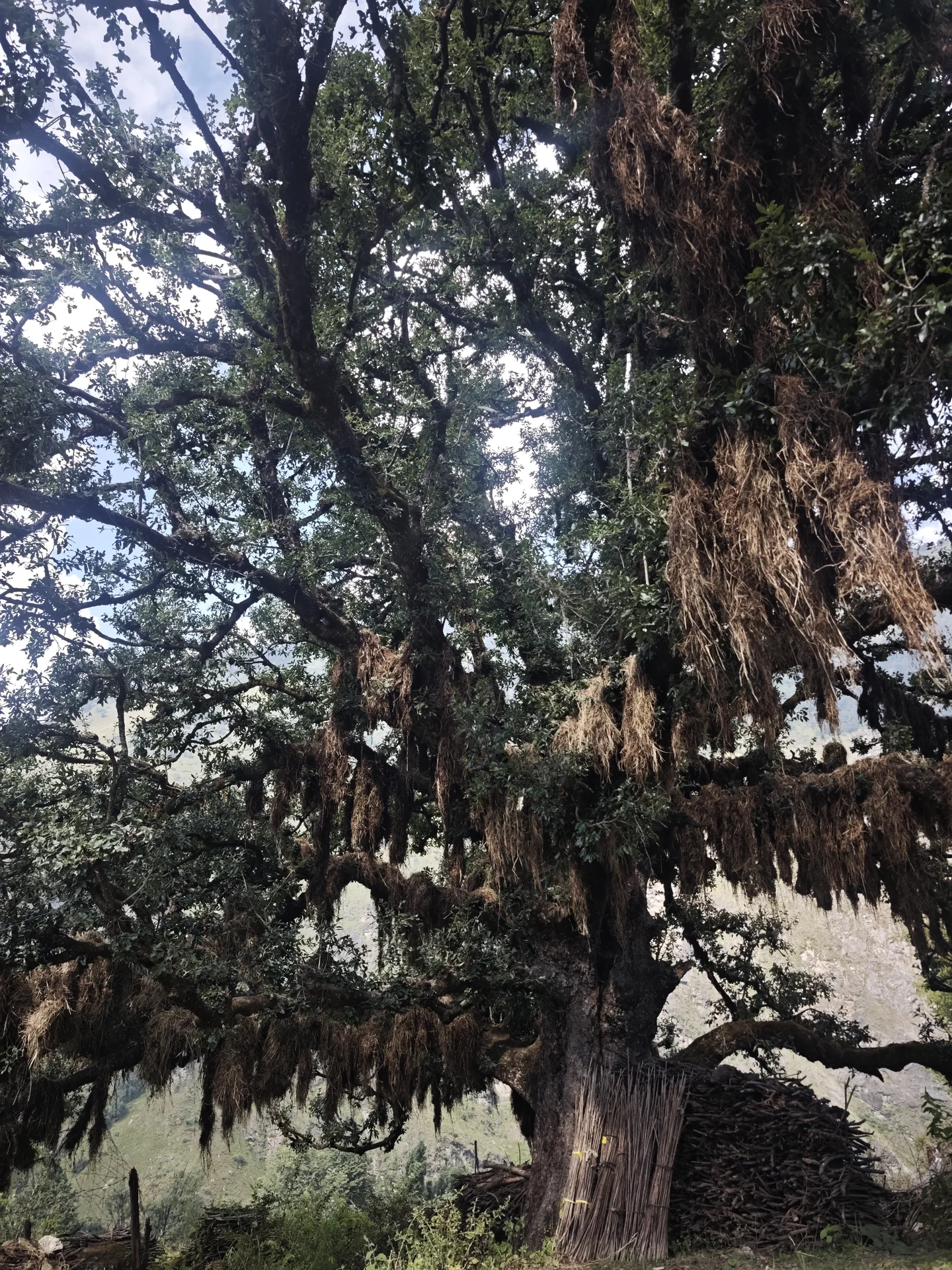
The air was full of the scents of the forest and damp earth.
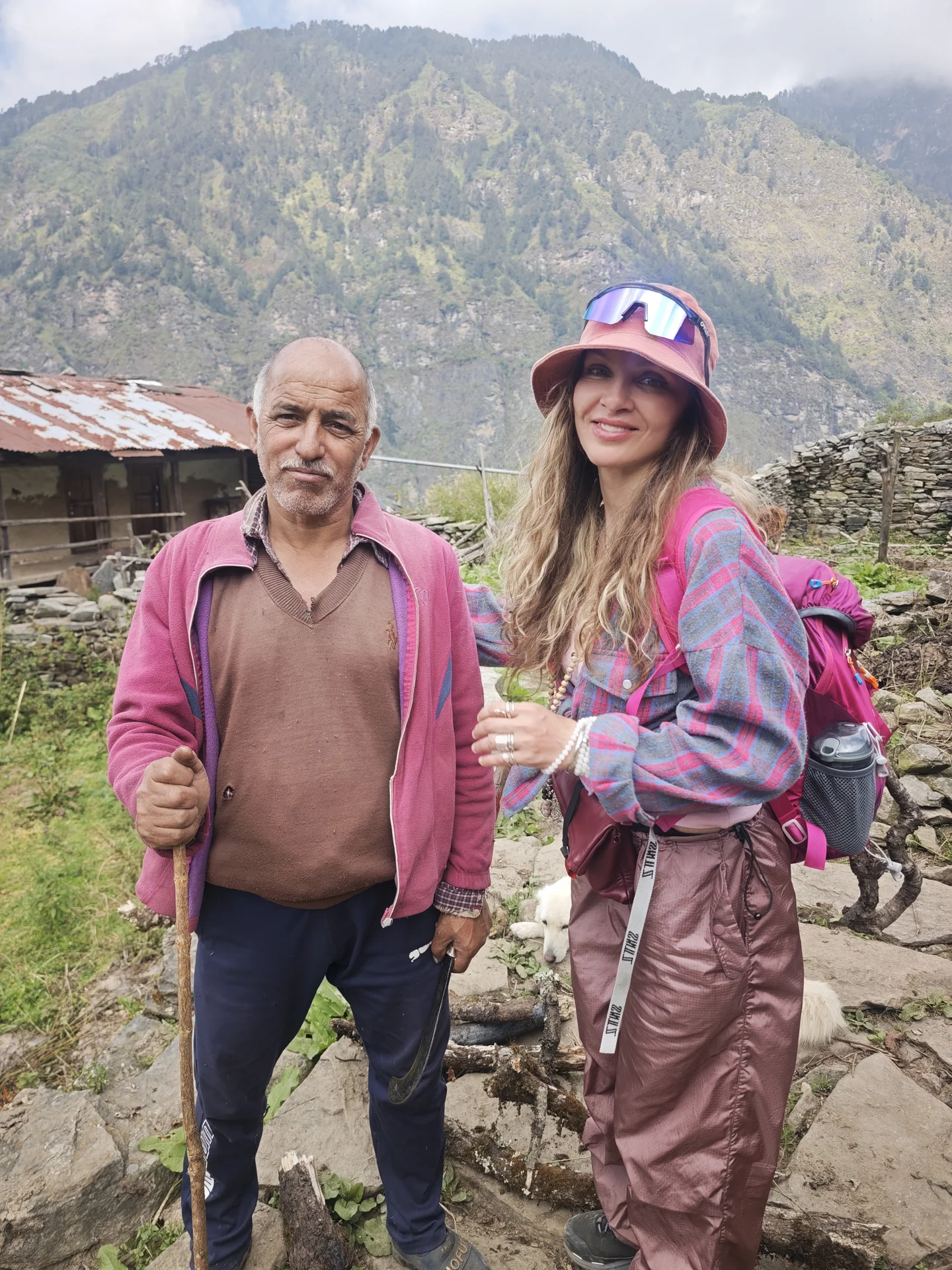
On the way, we passed a solitary house where a local family lived.
We stopped to meet them. They treated us to wonderful masala chai made with local herbs.
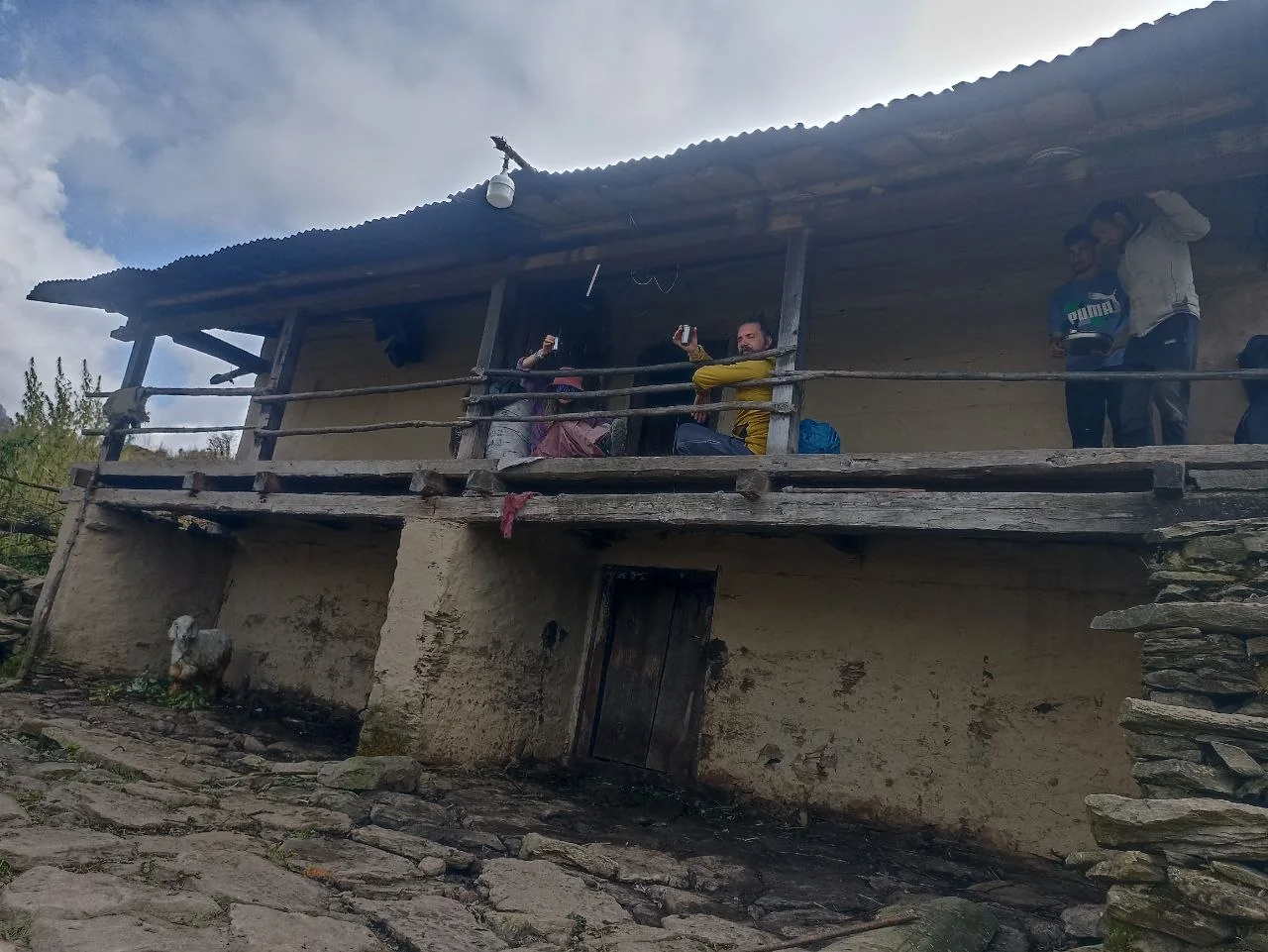
We also bought homemade ghee, which they make from the milk of their own cows.
Encounters like these stay with you: a simple life among the mountains, far from cities, moving to its own natural rhythm.
Further down, we entered the realm of the langurs.
Large grey monkeys with long tails leapt from branch to branch right over our heads.
Unlike the many macaques everyone knows from Rishikesh, langurs are much more reserved and discreet. They do not seek close contact with people.
I even tried offering one of them a raisin, but it showed no interest at all.
At last, we descended into the Yamuna Valley.
A car was waiting to take us back to Rishikesh.
What stays with us after the mountains
Technically speaking, this was not our most difficult trek.
We did not summit a five-thousand-metre peak, cross glaciers or achieve any great mountaineering feat.
But the Himalayas reminded us once again that no journey in the mountains is entirely predictable.
Even on a relatively easy route, circumstances can change in an instant.
A landslide you cannot cross. Someone who suddenly finds they can no longer walk. Weather that can overturn every plan in minutes.
You are far from civilisation, and often there is no hope that help will come quickly.
At some point you begin to realise how little is really in your control—and how much depends on luck, circumstance and, if you will, the blessing of the mountains themselves.
And yet every journey like this has a remarkable quality.
It gives you your vitality back.
Mountain air, movement, physical effort, boundless space, the night sky, the water of icy rivers—all of it seems to restart something deep within you.
You return a different person.
There is one more thing we talked about after the trek.
This time we did very little yoga in the usual sense. We had no long practice sessions or fixed daily schedule.
But that does not mean there was little yoga in our journey.
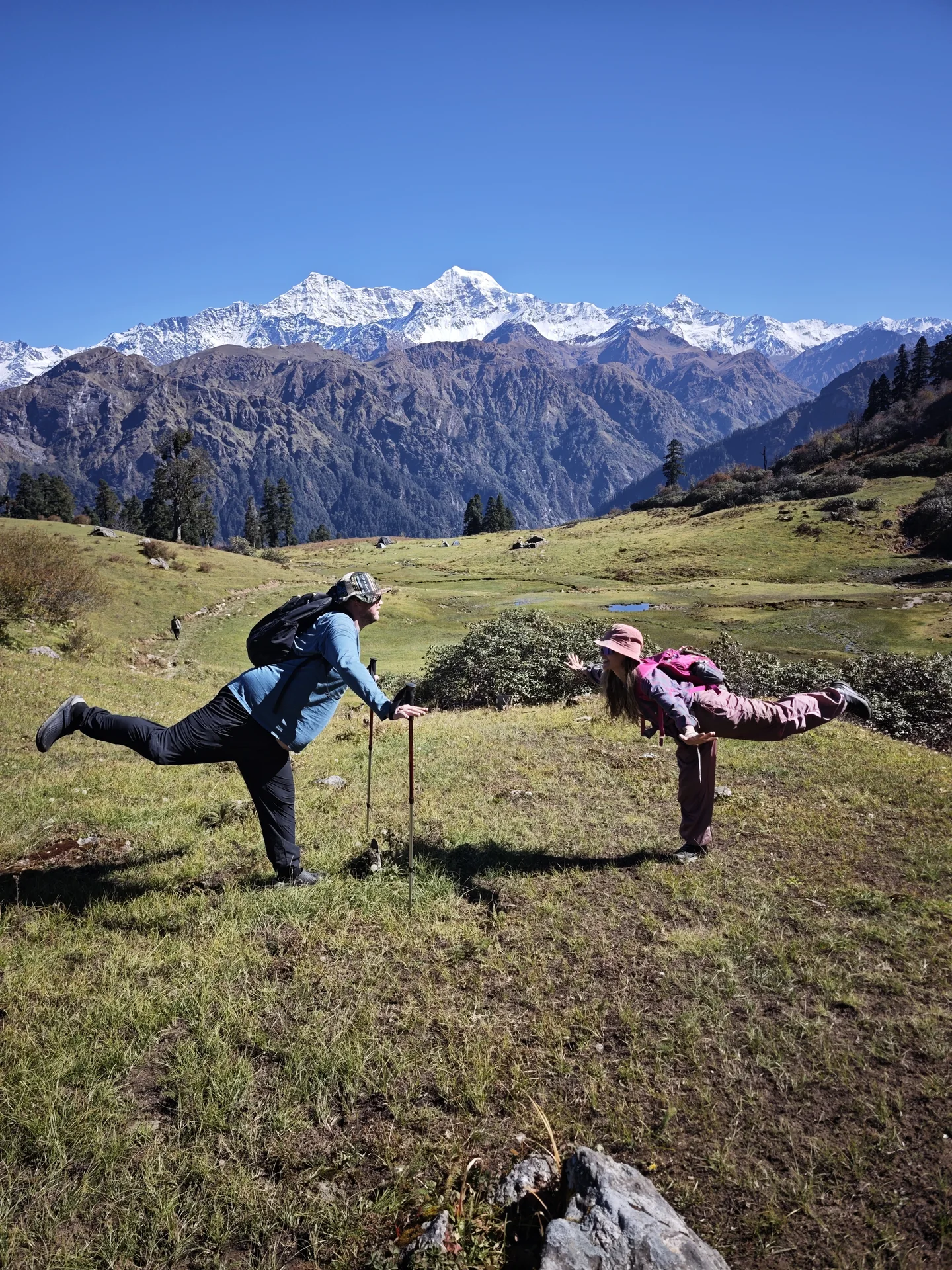
Sometimes it takes another form: making your way through a difficult stretch, accepting an unexpected change of plans, going on when you feel you have no strength left.
Or simply standing four thousand metres above sea level, surrounded by immense mountains, and for a moment feeling part of something infinitely greater.
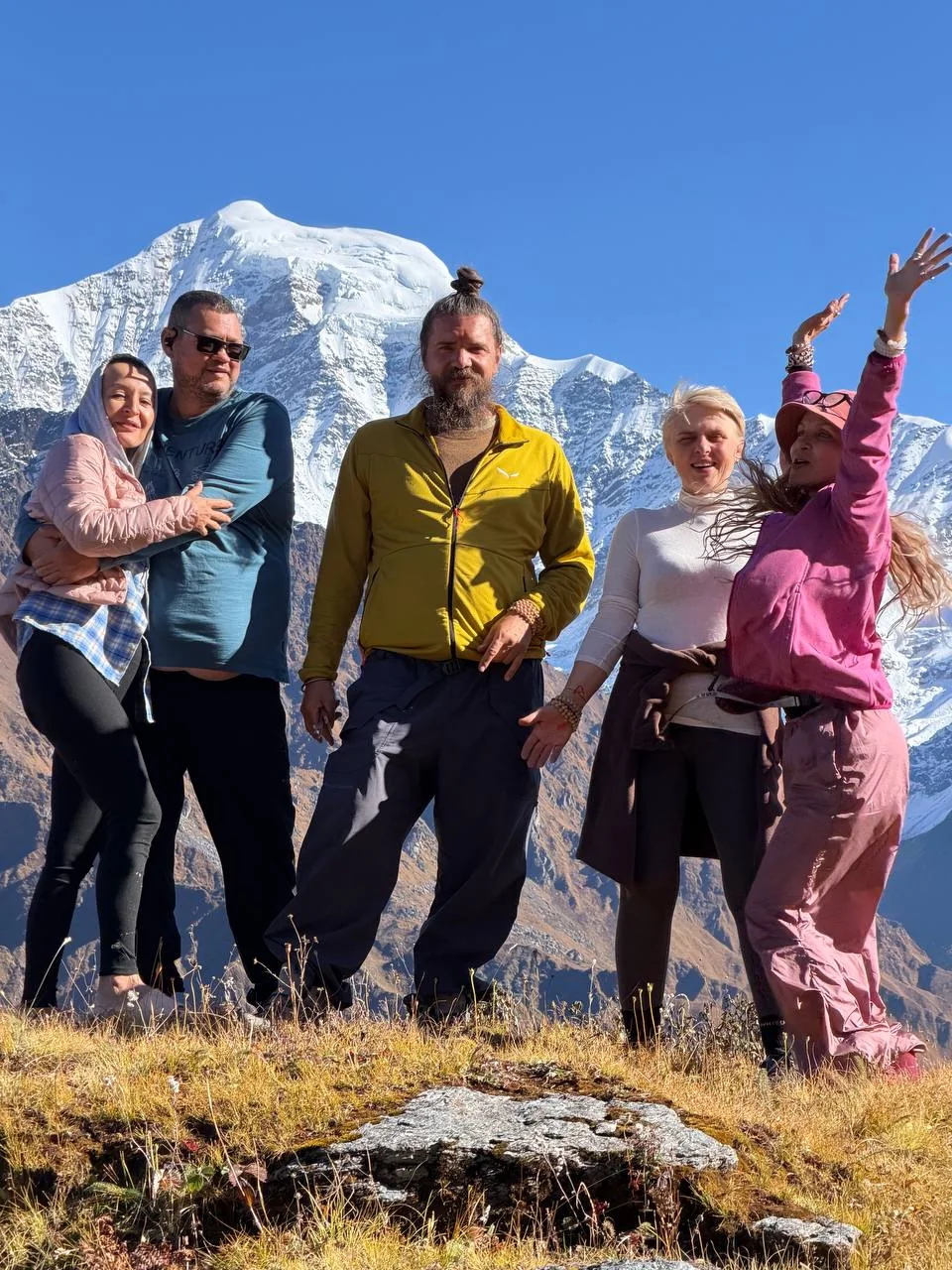
Some things are best experienced rather than explained.
As with all our previous treks, we completed this one safely thanks in no small part to our wonderful guide, Ketan Bhatt. His care and sensitivity know no bounds: he notices when someone needs help and knows how to offer support at just the right moment.
Ketan is not only a dependable guide but also a true connoisseur of Vedic culture. His account of Sati, Shiva's first wife, was told like an epic and helped us understand more deeply the culture and spirit of these places.
And it is for moments like these that I return to the Himalayas again and again.
Our next journey: New Year in Kerala!
Our next journey will be very different. For the New Year, we are going to Kerala on the shores of the Indian Ocean. There will be no mountain ascents or long trekking days. Instead, we will focus on deep inner work, renewal and genuine rest.
The programme is designed to give us time each day for intensive Kundalini Yoga and meditation, as well as full courses of Ayurvedic therapies—massage, shirodhara and other traditional treatments. And despite a rich daily schedule, there will always be time for the ocean: a swim in the warm waves, a rest on the beach or by the pool, sunshine and sea air.
One more thing matters to us. This time we have tried to make the journey as accessible as possible. We believe Kundalini Yoga unfolds especially deeply in group practice. When people come together, a shared energy arises—a synergy that strengthens each person's individual experience.
We would love to bring a large group together and give as many people as possible the chance to experience it.
Join us! We would be delighted to welcome the New Year with you in Kerala, by the ocean, in an atmosphere of deep practice, warmth and renewal.
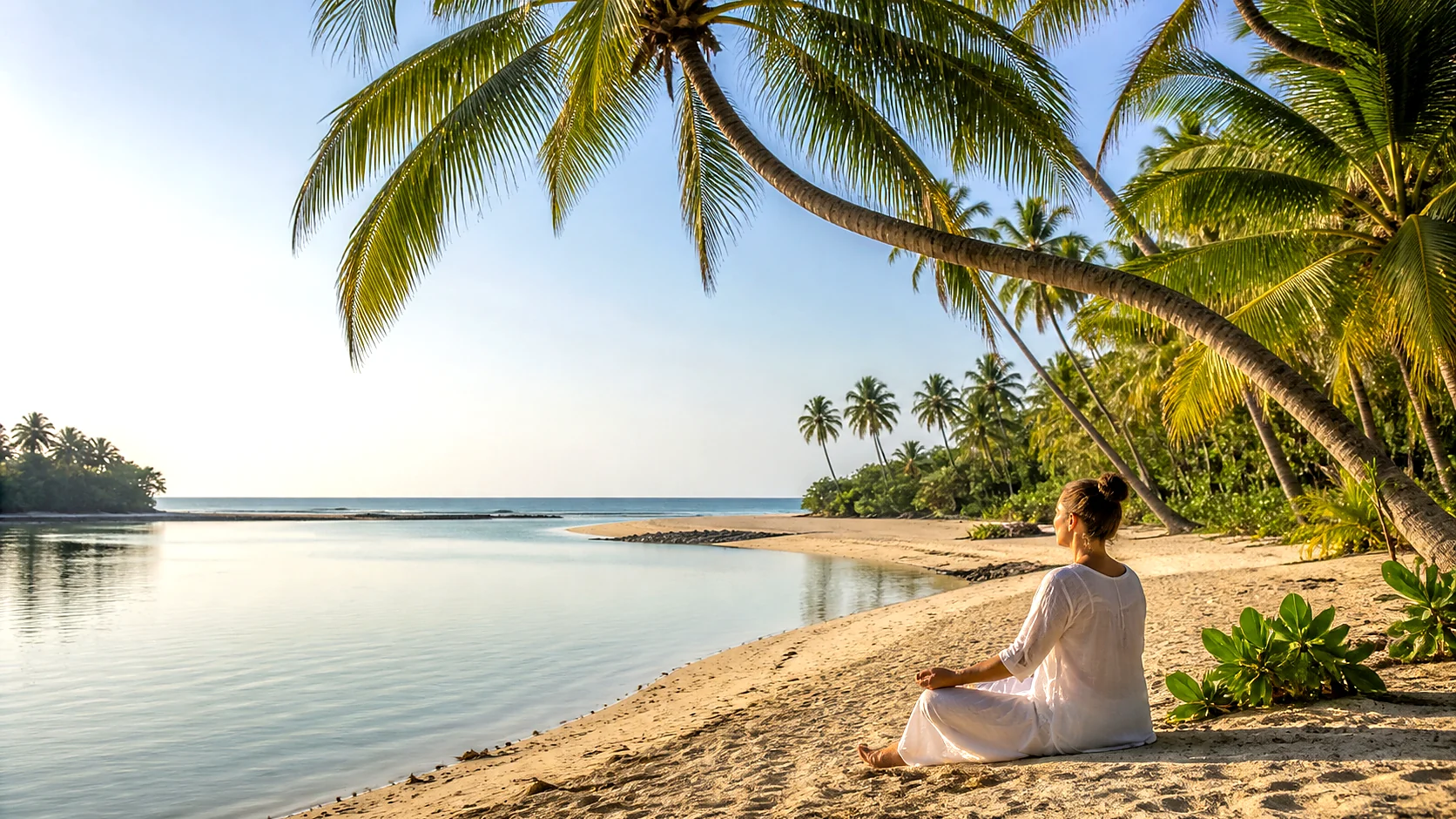
Our next journey
New Year in Kerala
After the Himalayan trails: the ocean, daily Kundalini Yoga, meditation, Ayurveda and time to restore your energy.
- Dates
- 2–10 January 2027
- Location
- Poovar, Kerala, India